Max Planck Institute for Meteorology and German Climate Computing Center Visit IAP
Date:2026-04-30
From April 28 to 29, 2026, Prof. Dr. Bjorn Stevens, Director of the Max Planck Institute for Meteorology (MPI-M), along with a delegation of three experts from the German Climate Computing Center (DKRZ), visited the Institute of Atmospheric Physics (IAP) at the Chinese Academy of Sciences. During the visit, the two sides held a series of academic seminars and in-depth discussions on frontier areas of climate science, further consolidating and expanding their long-standing collaboration and advancing bilateral cooperation toward deeper and broader horizons.
During the visit, a joint symposium was held, chaired by Prof. JIANG Dabang, Director of IAP. At the symposium, Prof. ZHOU Tianjun, Deputy Director of IAP, and Prof. Bjorn Stevens, Director of MPI-M, presented recent developments and key research directions of their respective institutions. Prof. JIANG Dabang then moderated the discussion session, during which both sides engaged in in-depth exchanges on core research topics, including the development of kilometer-scale high-resolution models, Earth system modeling, climate change and its response mechanisms, and innovative applications of artificial intelligence in climate science. Both sides agreed to further broaden the boundaries of cooperation based on existing collaborative networks, and to jointly build a multilateral cooperation platform together with leading East Asian research institutions. Future collaborative initiatives include joint applications for fundamental research funding from China and the European Union, collaborative implementation of major joint research projects, coordinated development of climate models and AI applications, and enhanced exchange visits for early-career researchers. These efforts aim to pool innovation synergies and jointly enhance regional and global climate research capabilities. The German experts explicitly recognized that China has become a major force in advancing global climate research frontiers, and expressed their commitment to encouraging German early-career researchers to conduct extended collaborative research in China, thereby fostering mutual growth of research talent.
At the invitation of the State Key Laboratory of Earth System Numerical Modeling and Application (LabESM) and the State Key Laboratory of Atmospheric Environment and Extreme Meteorology (AEEM), the four German experts delivered a high-level academic seminar series, attended by over 110 faculty members and students from IAP and beyond. The seminar was chaired by Prof. ZHOU Tianjun, and featured lively interactions, creating an excellent platform for sharing cutting-edge research and discussing collaborative directions.
During the seminar, the four German experts presented their latest research findings on frontier topics in climate science, engaging in in-depth discussions with the audience. Prof. Bjorn Stevens, whose research focuses on the influence of clouds and atmospheric processes on climate, elaborated on Earth's energy imbalance and related research progress. Prof. Peter Korn, Head of the Complex Modeling and Extreme Computing Research Group at MPI-M, shared insights on the resolution of climate simulations, discussing key technologies and application prospects of numerical methods and high-performance climate modeling. Dr. Christopher Kadow, Head of the Data Analysis Department at DKRZ, focused on the integration of generative AI and climate data, presenting innovative applications and practical outcomes in Earth system science. Dr. Chao Li, Head of the Climate and Weather Extremes Research Group at MPI-M, addressed the intersection of climate dynamics and socio-economic impacts, offering an in-depth interpretation of the scaling effects of climate change and their potential implications for human society.
During their visit, the German experts also toured the AEEM and held a thematic academic exchange with researchers from theLabESM, discussing specific cooperation details and laying a solid foundation for future collaborative implementation.
IAP and MPI-M formally signed a bilateral cooperation agreement in 2024. This visit marks the first high-level institute-level exchange between the two sides since the signing of the agreement. The visit not only further deepened the strategic partnership between the two sides but also built a more open and efficient bridge for climate science cooperation between China and Europe. It will provide strong support for scientific research on global climate change and coordinated responses, and contribute to the improvement of global climate governance systems.
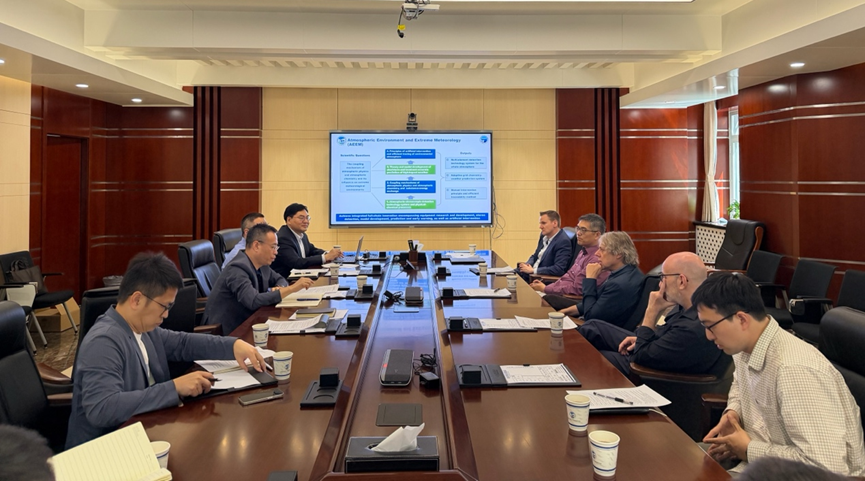
Symposium
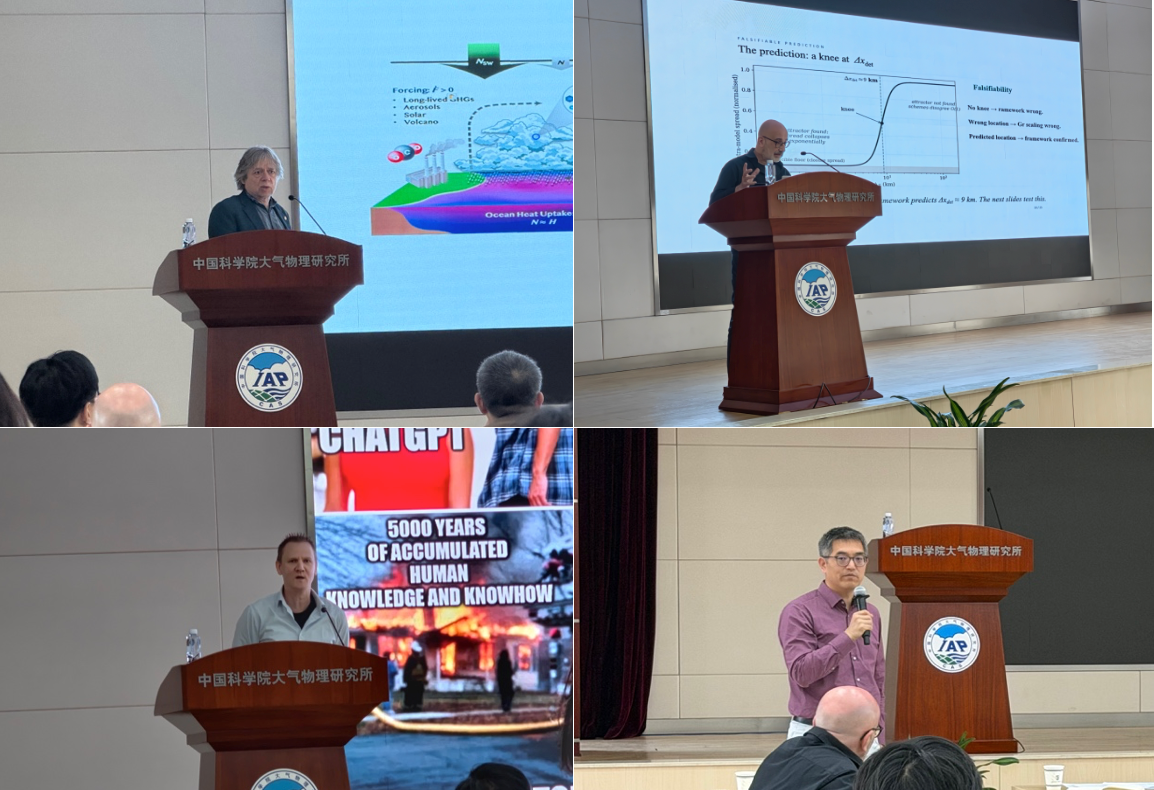
Four invited talks by German experts
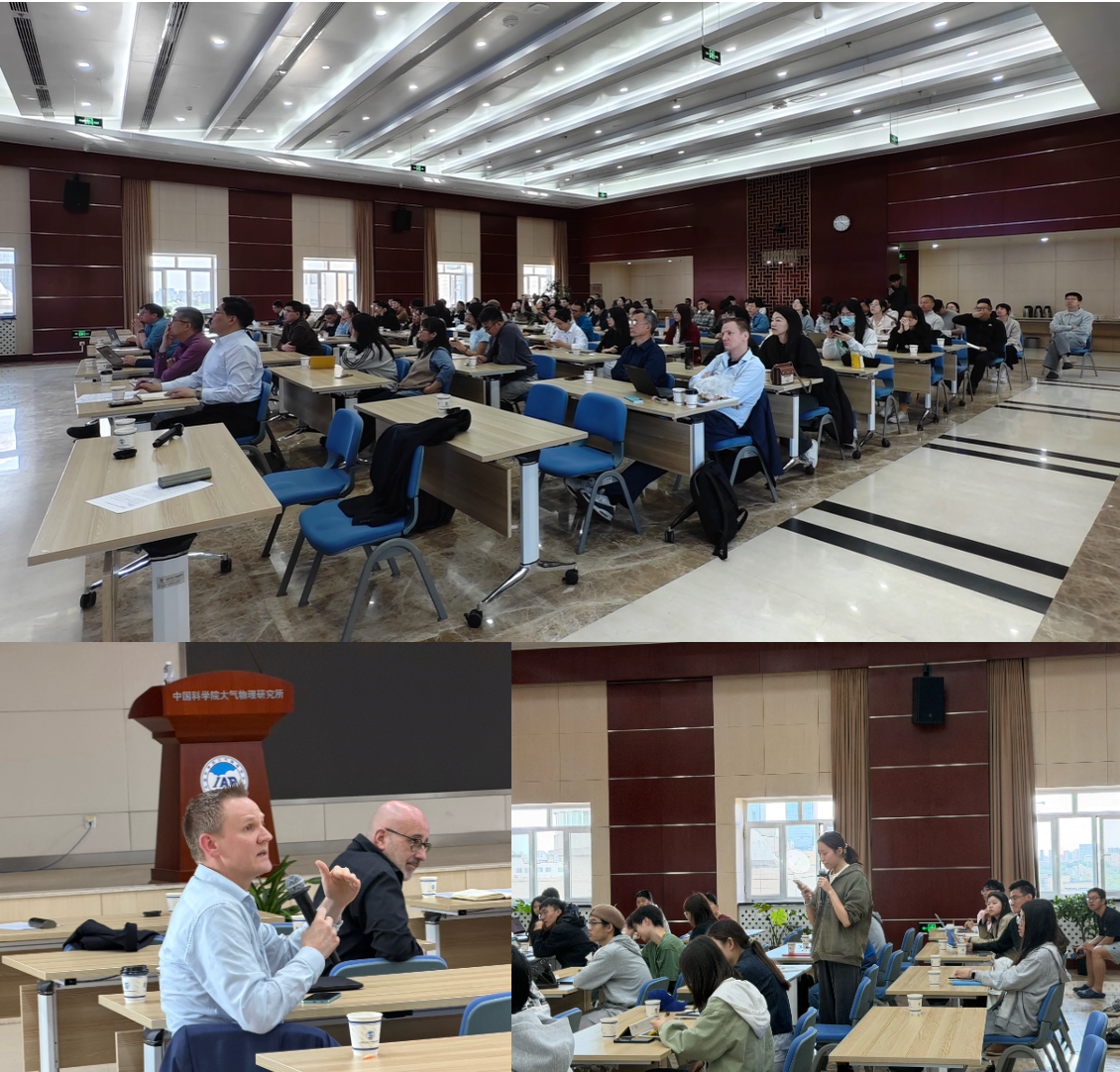
Seminar venue